
NICU Terms, Clearly Explained
The NICU can feel overwhelming, especially when you’re hearing words you’ve never heard before. This guide explains common NICU terms in simple language, so you can better understand your baby’s care and feel more at ease.
CPAP
Continuous Positive Airway Pressure (CPAP) helps babies breathe by providing a gentle stream of air that keeps their tiny lung air sacs open. This reduces the effort needed to breathe and supports lung function while they grow stronger.
Ventilator
A ventilator is a breathing machine used when a baby needs more help than CPAP can provide. It gently delivers breaths through a tube into the baby’s airway, taking over part or all of the work of breathing while the lungs recover.
Bradycardia
Bradycardia means your baby’s heart rate is slower than normal. It often happens alongside pauses in breathing and lets caregivers know when more support or stimulation is needed.
Desats
“Desats” refers to drops in oxygen levels seen on monitors when a baby isn’t getting enough oxygen in their bloodstream. These events help the care team know when to adjust breathing support.
Apnea
Apnea means your baby briefly stops breathing, usually for 15 seconds or longer, often because the part of the brain that controls breathing isn’t fully developed. Nurses and monitors track these pauses so support can be given quickly if breathing doesn’t resume on its own. Episodes can also be linked to a slower heart rate or low oxygen levels, which help your care team know when to intervene.
TPN
Total Parenteral Nutrition (TPN) is special nutrition given through a vein instead of by mouth or tube feeding. It ensures your baby gets the calories and nutrients they need when they aren’t ready to feed normally.
Isolette
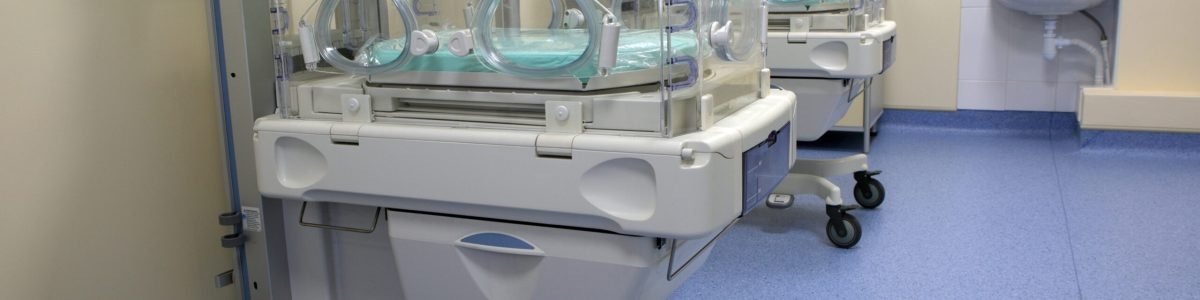
An isolette is a warmed, enclosed crib that helps tiny babies maintain their body temperature and stay protected while they develop. It’s often one of the first supportive environments a preemie experiences.
Bilirubin
Bilirubin is a yellowish substance made when red blood cells break down. Babies, especially preemies, often have high levels because their livers are still immature. When bilirubin rises, it can cause the skin and whites of the eyes to look yellow, a condition called jaundice.
Jaundice
Jaundice is the yellowing of a baby’s skin and eyes caused by elevated bilirubin levels. It’s very common in newborns, and most babies are treated with phototherapy to help their liver process the bilirubin safely.
Phototherapy
Phototherapy is a common treatment for elevated bilirubin/ jaundice in the NICU. Special blue lights (often called “Bili lights”) help break down excess bilirubin in the baby’s blood so it can be eliminated more easily.
FiO₂
FiO₂ stands for Fraction of Inspired Oxygen. It is the percentage of oxygen your baby inhales. In the NICU, it helps the team adjust oxygen support to keep your baby safe and comfortable. It is adjusted based on their breathing and oxygen saturation.
Gavage Feeding
A way of feeding breast milk or formula through a soft tube (nasogastric or orogastric) that goes into the baby’s stomach when they can’t feed by mouth yet. This lets babies receive nutrition safely until they can coordinate sucking, swallowing, and breathing.
NG Tube
NG Tube (Nasogastric Tube) is a soft feeding tube passed through the nose into the baby’s stomach to deliver milk or nutrients when they aren’t yet able to feed by mouth. NG tubes are common for tiny babies because they’re easier to place and more comfortable than other options while the baby grows stronger.
OG Tube
OG Tube (Orogastric Tube) is a soft feeding tube passed through the mouth into the baby’s stomach to provide milk or nutrients when a baby is not ready to feed orally. OG tubes are often used when nasal passages are blocked, too small, or when nasal breathing is needed for other support, and they still allow the baby to get the nutrition they need safely.
Room Air
Room air is the normal air we breathe, which is about 21% oxygen. In the NICU, it’s often mentioned to compare how much extra oxygen support a baby needs.
PICC Line
A PICC line is a long, thin IV inserted into a large vein that delivers fluids, medicines, or nutrition over time. It’s useful when your baby needs ongoing support without frequent pokes.
ROP
(Retinopathy of Prematurity) ROP is a condition that can affect the blood vessels in a preemie’s eyes as they develop too early. Doctors monitor it to make sure abnormal blood vessel growth doesn’t threaten vision. Early detection means treatment can protect sight and support healthy eye development.
Kangaroo Care
Kangaroo care (also called skin-to-skin contact) is when you hold your diaper-clad baby upright against your bare chest. This quiet closeness helps babies stay warm, keeps breathing and heart rate steady, supports better sleep and weight gain, and deepens bonding between you and your baby.
NEC
(Necrotizing Enterocolitis) NEC is a serious intestinal condition seen mostly in premature babies where part of the bowel becomes inflamed and damaged. It can make feeds intolerable and may require bowel rest, antibiotics, or surgery. Early recognition and treatment help protect the baby’s gut and overall recovery.
Family-Centered Care
Family-Centered Care is an approach in the NICU that treats parents and caregivers as essential partners in their baby’s care. It encourages open communication, involvement in decisions, and support for the family’s needs throughout the NICU stay.
Nothing by Mouth (NPO)
NPO is short for nil per os, a medical phrase meaning your baby is not getting food or liquids by mouth for a period of time. This is done so the gut can rest, to prevent aspiration, or before certain tests or procedures. It helps protect your baby’s comfort and safety while their digestive system is monitored or treated.
Intraventricular Hemorrhage (IVH)
A brain bleed (IVH) happens when fragile blood vessels in a premature baby’s brain leak into the fluid-filled ventricles. It most often occurs in very early preemies and is monitored closely because the amount of bleeding can affect development and guide care needs.
Respiratory Distress Syndrome (RDS)
RDS is a breathing condition seen in many premature babies whose lungs don’t yet make enough surfactant, a substance that keeps lung air sacs open. Doctors treat it with oxygen, CPAP, and sometimes surfactant replacement so the lungs can work more easily as they mature.
Bronchopulmonary Dysplasia (BPD)
BPD is a form of chronic lung disease that can develop in premature babies whose lungs are underdeveloped and exposed to oxygen or breathing support. It means the lungs need extra care and support as they continue growing, sometimes extending care even beyond the NICU stay.
NICU Support & Clarity Straight to Your Inbox
Join my NICU email list for:
• Clear explanations of confusing medical terms
• Emotional support for the hospital journey
• Real NICU mom stories
• What to expect during common NICU milestones
Thank you!
You have successfully joined our subscriber list.