
When your baby is in the NICU, one of the most common questions parents ask is: “How much milk should my baby be eating?”
NICU feeding amounts can feel confusing at first. Nurses often report feeds in milliliters (ml), and the numbers may seem very small compared to what full-term babies drink at home.
However, premature babies have different nutritional needs. Because of this, NICU feeding amounts are carefully calculated and increased slowly as babies grow stronger.
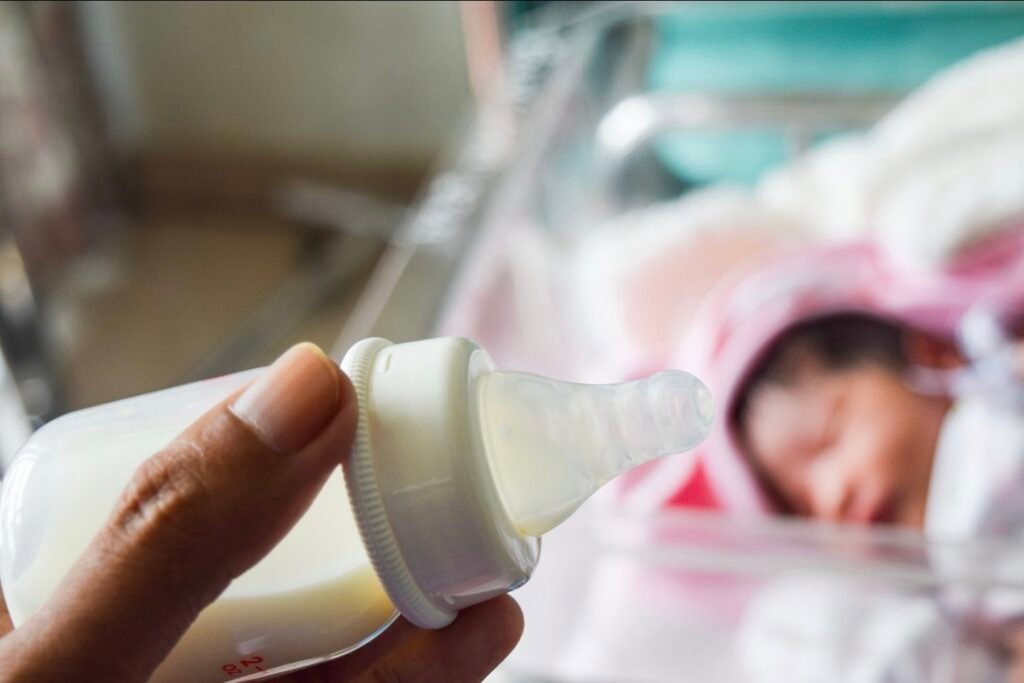
How NICU Feeding Amounts Are Calculated
NICU doctors usually calculate feeding volumes based on a baby’s weight.
A common formula used in many NICUs is: 150 milliliters per kilogram per day.
This means a baby should receive about 150 ml of milk for every kilogram they weigh each day.
For example, if a baby weighs 1.2 kg, the daily feeding amount might look like this: 150 × 1.2 = 180 ml per day.
That total amount is then divided into several smaller feedings throughout the day.
Most NICU babies eat every 2–3 hours, so the total milk intake is spread across multiple feeds.
Why Premature Babies Start With Very Small Feeds
In the early days of life, premature babies often begin with tiny feeding volumes.
For instance, a baby may start with just:
- 2 ml
- 5 ml
- 10 ml
Although these amounts may seem small, they are appropriate for a baby with a tiny stomach.
Meanwhile, NICU teams monitor how well the baby tolerates feeds. If the baby digests milk well, doctors gradually increase the amount.
This slow progression helps protect babies from feeding complications while supporting healthy growth.
Typical NICU Feeding Amounts by Weight
Although every baby is different, many NICU feeding volumes fall within certain ranges.
Below is a general example of feeding amounts as babies grow.
| Baby Weight | Typical Feeding Amount |
|---|---|
| 1 kg (2.2 lbs) | 10–20 ml per feed |
| 1.5 kg (3.3 lbs) | 20–40 ml per feed |
| 2 kg (4.4 lbs) | 30–60 ml per feed |
| 2.5 kg (5.5 lbs) | 45–75 ml per feed |
These numbers are only general examples. Doctors adjust feeding volumes based on each baby’s condition.
How NICU Feeding Volumes Increase
As babies grow and tolerate milk better, feeding amounts usually increase gradually.
For example, NICU teams may increase feeds by 2–5 ml at a time.
Because premature babies require careful monitoring, these increases often happen slowly over several days.
During this time, nurses watch for signs that the baby is tolerating feeds well, including:
- stable breathing
- comfortable digestion
- steady weight gain
If everything looks good, feeds may continue to increase.
Why NICU Feeds Are Measured in Milliliters
You may notice that NICU staff always report feeds in milliliters instead of ounces.
This is because milliliters allow healthcare providers to measure very precise feeding amounts, which is especially important for premature babies.
If you’re curious why this system is used, you can read more about it in this guide: Why NICU Feeds Are Measured in Milliliters Instead of Ounces.
What NICU Parents Should Remember
Every premature baby has a unique feeding journey.
Some babies advance quickly, while others need more time to tolerate feeds. For this reason, feeding amounts may change frequently during a NICU stay.
Although the numbers may seem confusing at first, they are carefully chosen to support your baby’s growth and development.
Over time, those tiny milliliter feeds gradually turn into full bottles and breastfeeding sessions.
The NICU journey can bring many questions, emotions, and unexpected challenges.
Having clear information and support can make the experience feel a little less overwhelming.
If you’d like more guidance on NICU care, preemie development, pumping, and life after the NICU, join my email list.
I share helpful resources, practical tips, and encouragement for parents navigating this journey.
Sources
Information in this article is consistent with guidance from trusted medical organizations, including:
- March of Dimes – Resources on prematurity and NICU care
- Stanford Children’s Health – Information about feeding premature babies
- Children’s Hospital of Philadelphia (CHOP) – Educational resources on NICU care and newborn health
- University of Iowa Health care – Feeding: NICU handbook
- National Library of Medicine – Guidelines for Feeding Very Low Birth Weight Infants
Read Also: Why NICU Babies Eat Every Three Hours, Why NICU Feeds are Measured in Milliliters Instead of Ounces