
If your baby is in the NICU, you may hear nurses say things like: “Your baby took 32 ml this feeding.”
At first, this can feel confusing. Most parents are used to measuring baby bottles in ounces, not milliliters.
So why does the NICU use ml instead of ounces?
The answer is simple. Premature babies need very precise nutrition, and milliliters make it easier to measure small amounts of milk safely.
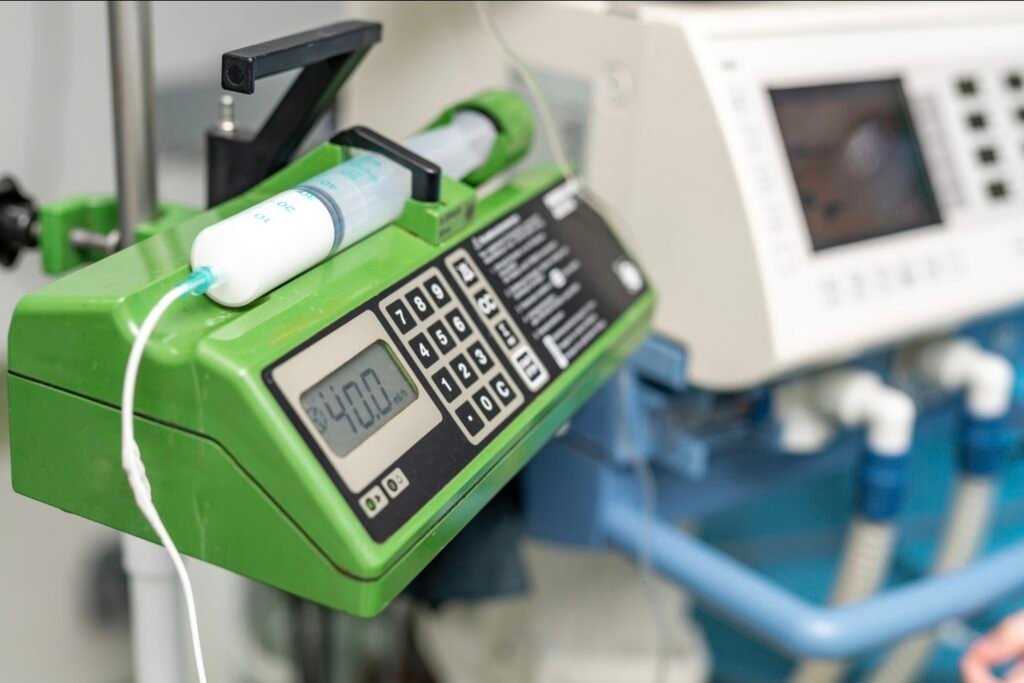
Why NICUs Use Milliliters
In the NICU, every feeding is carefully calculated. Doctors and nurses need to know exactly how much milk a baby receives.
Because premature babies are so small, even tiny changes in feeding amounts can matter.
For this reason, NICUs use milliliters (ml) instead of ounces. Milliliters allow healthcare teams to measure milk much more accurately.
In addition, feeding volumes are often adjusted daily as babies grow. Using milliliters helps staff make small, precise adjustments when increasing feeds.
How Often Are NICU Babies Fed?
NICU babies are usually fed on a structured schedule, often every 2 to 3 hours, depending on their gestational age, weight, and medical condition.
Because premature babies have very small stomachs, they need smaller amounts of milk more frequently throughout the day.
Using milliliters allows NICU teams to carefully measure each feeding and track exactly how much milk a baby receives over a 24-hour period.
This precision helps doctors and nurses make small adjustments to support healthy growth.
You can learn more about how these routines work in our guide to Why NICU Babies Eat Every Three Hours.
How NICU Feeding Volumes Are Calculated
NICU teams carefully calculate a baby’s nutrition and fluids based on medical needs.
Doctors often order feeds using a formula like this: “150 ml per kilogram per day”.
This means a baby should receive 150 milliliters of milk for each kilogram they weigh every day.
For example, imagine a baby who weighs 1.2 kilograms.
The calculation would look like this: 150 × 1.2 = 180 ml per day.
After that, the NICU team divides the total amount across multiple feedings.
For instance, if the baby eats every three hours, those 180 ml might be divided into eight smaller feeds throughout the day.
As a result, each feeding may only be 20–25 ml.
Why Ounces Don’t Work Well for NICU Babies
Another reason NICUs use milliliters is because premature babies start with very small feed volumes.
Early feeds can be as tiny as 2 ml, however, if these feeds were measured in ounces, the numbers would be extremely small and difficult to track.
For example:
1 ounce = 30 milliliters. Therefore, a 5 ml feeding would equal only 0.17 ounces.
Because of this, milliliters make it much easier to measure and record tiny amounts of milk.
How Feeding Amounts Increase Over Time
Fortunately, feeding volumes grow as babies get stronger.
In the beginning, feeds are very small. Meanwhile, nurses closely watch how well babies tolerate milk.
Once babies show they can handle feeds, the NICU team slowly increases the volume.
Typical progression may look something like this:
Early feeds:
- 2–5 ml
Advancing feeds:
- 10–20 ml
Later feeds:
- 30–60 ml
Eventually, babies may take amounts closer to a normal bottle feeding before they are discharged home.
Quick Milliliter to Ounce Conversion
Many parents prefer thinking in ounces. Therefore, it helps to remember a simple conversion.
| Milliliters | Ounces |
|---|---|
| 30 ml | 1 oz |
| 60 ml | 2 oz |
| 90 ml | 3 oz |
| 120 ml | 4 oz |
Keeping this chart in mind can make NICU feeding updates easier to understand.
Why Precision Matters in the NICU
Premature babies require very precise monitoring of their nutrition and fluids to support healthy growth and development.
Because of this, NICU teams track feeds very closely. They monitor:
- Weight gain.
- Feeding tolerance.
- Digestion.
- Overall growth.
As a result, feeding amounts may change frequently during a NICU stay.
Although hearing feeds in milliliters may feel unfamiliar at first, most parents become comfortable with it quickly.
What NICU Parents Should Remember
Every NICU baby is different. Feeding volumes depend on several factors, including:
- Birth weight.
- Gestational age.
- Medical conditions.
- Feeding tolerance.
For that reason, your baby’s feeding plan may look different from another baby in the NICU.
Nevertheless, the goal is always the same: helping your baby grow safely and steadily.
Final Thoughts
At first, hearing feeding amounts in milliliters can feel confusing. However, this system allows NICU teams to provide precise nutrition for even the smallest babies.
Over time, those tiny milliliter feeds slowly increase as babies grow stronger.
Eventually, many NICU parents go from counting milliliters to celebrating full bottles and breastfeeding sessions.
The NICU journey can bring many questions, emotions, and unexpected challenges.
Having clear information and support can make the experience feel a little less overwhelming.
If you’d like more guidance on NICU care, preemie development, and life after the NICU, consider joining my email list.
I share helpful resources, practical tips, and encouragement for parents navigating this journey.
Sources
Information in this article is consistent with guidance from trusted medical organizations, including:
- March of Dimes – Resources on prematurity and NICU care
- Stanford Children’s Health – Information about feeding premature babies
- Children’s Hospital of Philadelphia (CHOP) – Educational resources on NICU care and newborn health
- University of Iowa Health care – Feeding: NICU handbook
- National Library of Medicine – Guidelines for Feeding Very Low Birth Weight Infants
Read also: Adjusting to Life after NICU, How Much Milk Do Premature Babies Eat?